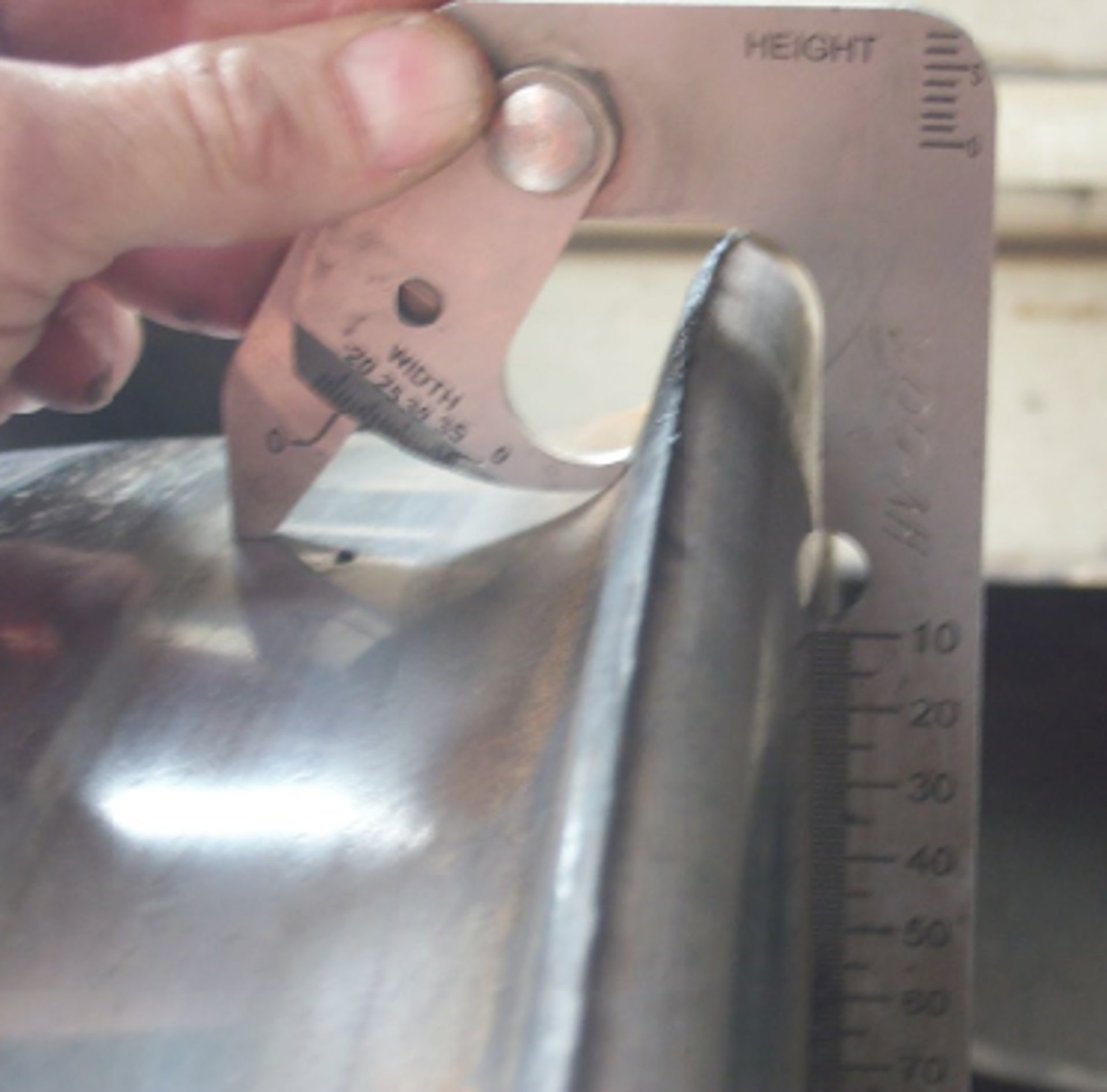
Minimising rail wheel wear and costs
Paul Baxter
2 min read
Minimising rail wheel flange wear. A simple, low-cost solution to save millions.
Flange wear causes
Flange wear can happen for several reasons, including tight curves, insufficient lubrication on the flange or track, bogie mistracking, or using the wrong wheel flange for the job and track.
One often-overlooked factor that can make a big difference in wheel wear is how well the wheel is turned.
Asymmetry in the wheel set as a major cause of flange wear
A study by AAR/MxV Technology Digest TD22-026 found “greater asymmetry means greater potential asymmetry in wear position”.
The report's extracted diagram shows an overlay of two wheels on a common axle. One has a near-full flange, and the other has a heavily worn flange.
As the right wheel has worn, its running position changes. This disrupts how the wheel's taper centres the wheelset on the rails, forcing it across. As this wear increases, the diameter difference and mistracking worsen until one wheel begins rubbing on the flange.
Reducing flange wear
You can largely prevent flange wear, however, by keeping tread wear on the running point.
The key to this is controlling turning tolerances.
The standard turning tolerance for freight wheels is 0.5 mm. This standard is outdated and was made for manual lathes with profile cutters. Today, a well-calibrated modern wheel lathe can easily achieve tolerances of at least 0.1 mm.
If the wheels on the same axle are turned to a 0.1 mm tolerance instead of 0.5 mm, the running points stay much more centred and even throughout the wheel’s life.
This prevents running-point drift that leads to asymmetric wear and, eventually, excessive flange wear.
A worn flange costs a lot to fix.
To restore a worn flange, you must cut the wheel tread to restore the flange shape. This process removes about 15 mm of wheel life from the radius for a half-worn flange compared to about 4mm to restore a worn tread.
A small tolerance change can add at least a year to turn life and extend overall wheel disc life to more than 20 years on a train that runs continuously.
For a rail fleet, even a small improvement adds up quickly. With tens of thousands of wheels, this longer life can save several million dollars in maintenance costs continuously.


Rolling stock training & developement
enquiry@rollingstocktraining.com.au
Ph: 0429 079 481
ABN: 9866 1534 398
Ready to transform your team's skills?
Contact us for a free consultation and discover how we can tailor our training or create training to your exact needs.