
Some of our investigative work
Locomotive low water shutdowns
A 16-cylinder locomotive experienced multiple periodic low-water failures. Testing could not find any leaks. Analysis and system testing found that it would fail only after 35 minutes at full load. This gave the appearance of a random failure, as it would only occur in certain places.
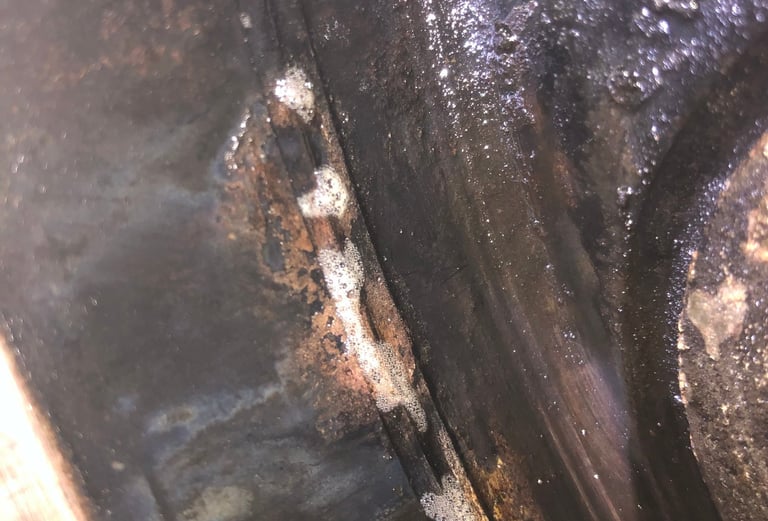
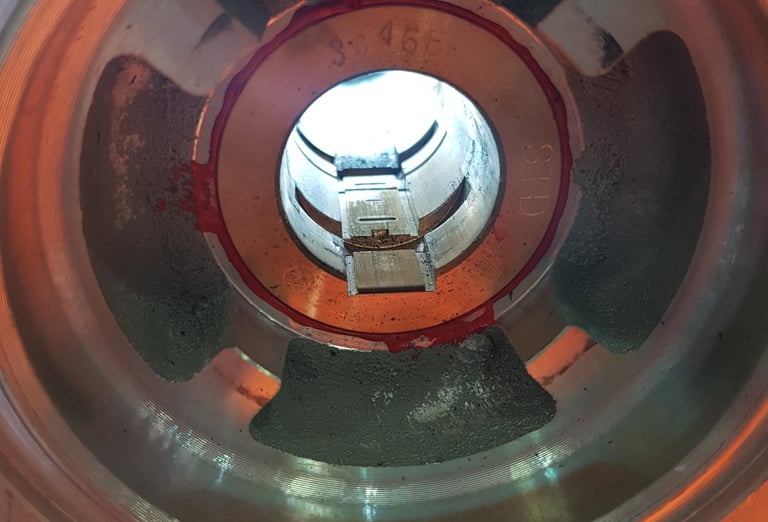
Testing at pressure points confirmed a failure process: sight glass bubbles, then a bounce, then pressure rises at the water outlet, and eventually a header tank overflow. Static cylinder pressure testing could not locate the fault. A series of elimination tests led to the removal of one cylinder. Pressure testing of the cylinder after an hour at 550 kPa finally revealed a minute crack in the head that, when the cylinder was hot enough and under full-load pressure only, would force cylinder pressure into the water system. The picture is of the soap bubbles locating the crack.
Problem found and a new diagnostic process implemented that identified several other locomotives with the same random issues.
Fleet bearing failures
A new fleet of wagons began suffering bearing failures across multiple batches.
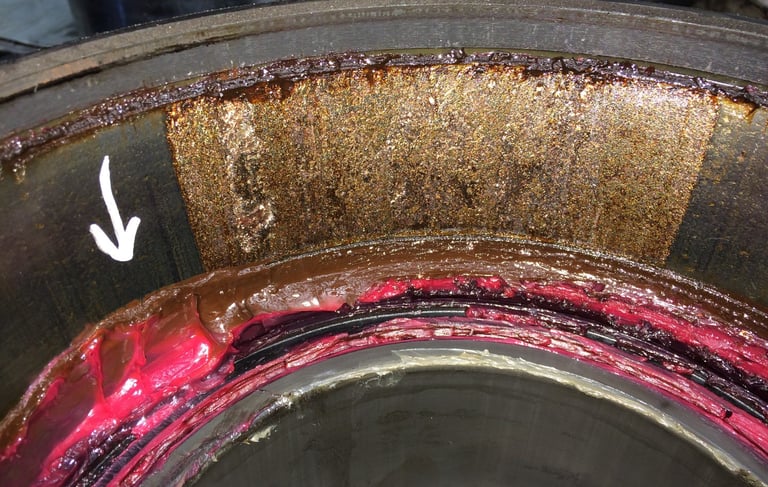
There was no single batch or manufacturing cause identified, and the suspect was thought to be faulty seals. Analysis of the bearing when stripped and crackle testing of grease identified moisture through the grease in affected bearings.
This was eventually traced back to likely contamination during transport of the pre-greased sealed bearing from the manufacturer to the assembly.
Warranty claim proven.
Train emergency brake applications
An ECP train was having random emergency brake applications after an initial brake application. Extensive testing could not find any faults with the train. Log analysis revealed, in one log, a one-second gap between the pneumatic and ECP systems commanding the emergency application, proving it was a pneumatic problem.
Further ECP log analysis showed it was coming from a wagon in the second half of the train. This could be an emergency portion, a vent valve, or the OEM had an Echelon tested, but it was used overseas. A series of component cutouts to eliminate the possible wagon causes on each wagon was instigated until the issue was traced to one of the last wagons.
The problem was found to be contamination in one of the emergency portion slide valves, which allowed a small leak of air into the emergency release spool valve.
Mystery solved.
Centre liner damage
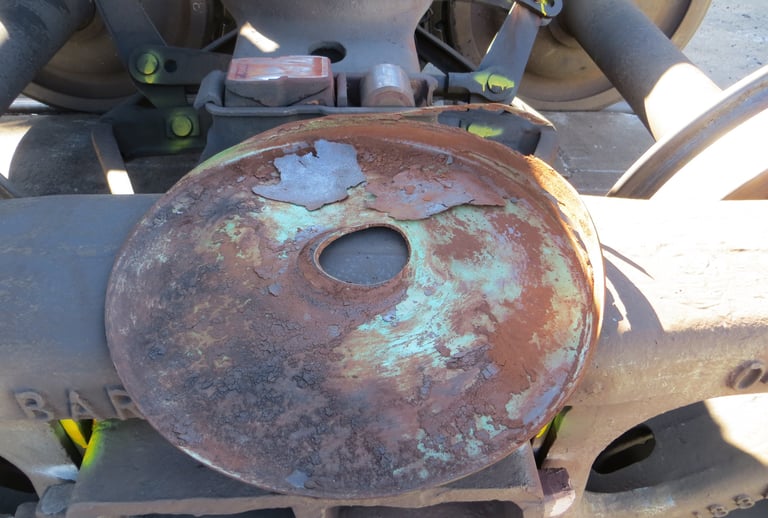
Centre liners were noted to be distorted and flattened on some wagons.
The liners are Neoprene and very good wearing; however, Neoprene is also susceptible to breakdown from sulphur.
Due to cracks in the top deck, water had infiltrated into the centre sill and, with some cracks around the centre casting, had infiltrated into the centre liner. The water, washed over coal residue, had high levels of sulphur that affected the liners.
The issue of cracks was identified, and rusting of the centre sills was identified early.
A mysterious fault traced back to multiple other developing faults.
Rollingstock technical training & development
enquiry@rollingstocktraining.com.au
Ph: 0429 079 481
ABN: 9866 1534 398
© 2025. All rights reserved.
Ready to transform your team's skills?
Contact us for a free consultation and discover how we can tailor our training or create training to your exact needs.